


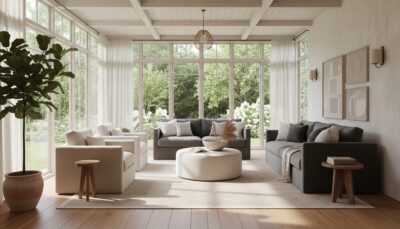
If you’ve ever stepped into an older sunroom in July, you know the problem: by 10 a.m. it’s already a greenhouse. In the Dallas-Fort Worth area, where summer temperatures regularly climb past 100°F and humidity makes it feel worse, a poorly built sunroom can go from “favorite room in the house” to “storage space nobody uses” in a single season.
The good news is that this is a solved problem, but only if the sunroom is designed with North Texas weather in mind from the start. Here’s what actually makes the difference.
Why Standard Sunrooms Struggle in DFW
Most of the discomfort in a hot sunroom comes down to three things:
- Single-pane or non-Low-E glass that lets heat radiate straight through
- Thin or uninsulated walls and rooflines that can’t hold conditioned air
- Poor ventilation design, so hot air has nowhere to go but stay put
DFW’s climate is unusual in that it demands a room that performs well in both directions, blistering summer heat and the occasional hard winter freeze. A sunroom built for a milder climate (or built cheaply) usually can’t do both.
What Makes a Sunroom Truly Four-Season in North Texas
Low-E, dual-pane glass. Low-emissivity coatings reflect infrared heat while still letting in visible light, which is the single biggest upgrade for cutting summer heat gain. Paired with dual-pane construction, it also helps in the rare DFW ice storm or cold snap.
Insulated roof panels instead of plain glass or polycarbonate roofing. A glass roof looks great in photos but turns a room into a solar oven by early afternoon. Insulated roof systems with a smaller, well-placed skylight or glass accent give you natural light without the heat load.
Properly sized HVAC integration. A sunroom doesn’t need a massive new system — it needs the right-sized mini-split or ducted extension for its square footage, plus insulation good enough that the unit isn’t fighting a losing battle all afternoon.
Thermal breaks in the frame. Aluminum framing conducts heat efficiently, which is great for a skillet and terrible for a sunroom wall. Frames with thermal breaks (a non-conductive barrier inside the frame) keep exterior heat from transferring straight to the interior surface.
Smart orientation and shading. In DFW, west- and south-facing sunrooms take the brunt of the afternoon sun. Overhangs, exterior shades, or strategic landscaping can cut heat gain significantly before the glass even comes into play — something worth discussing at the design stage, not after the room is built.
The Payoff
A properly insulated sunroom in the DFW area isn’t just more comfortable, it’s usable 12 months a year instead of becoming an expensive plant nursery from June through September. It also tends to hold its value better, since buyers touring a home in summer will immediately notice (and remember) whether the sunroom is actually livable.
Questions to Ask Before You Build
If you’re comparing sunroom options in Dallas-Fort Worth, it’s worth asking any builder directly:
- What glass package do you use, and is it Low-E?
- Is the roof insulated, or is it glass/polycarbonate?
- Do your frames have thermal breaks?
- Can this room be heated and cooled on my existing system, or does it need its own unit?
The answers will tell you quickly whether you’re looking at a three-season add-on or a true four-season room built for Texas weather.
Thinking about adding a sunroom that can actually handle a DFW summer? Sunshine Sunrooms has designed and built insulated, climate-ready sunrooms for North Texas homes for over 31 years, serving Dallas, Fort Worth, Plano, Frisco, McKinney, Arlington, and the surrounding Metroplex. Request a free design consultation or call (972) 243-5390 to talk through options for your space.


