


Key Takeaways
North Texas clay can move a sunroom slab differently than the house foundation, and the result often shows up as torn caulk, drafts, sticking doors or a visible gap. This guide walks through the warning signs, how to track whether the joint is still moving, when to call a foundation specialist first, and what a proper repair involves. Sunshine Sunrooms offers a free in-home inspection and repair pricing, and can tell you if foundation movement needs attention first.
Why North Texas Clay Moves Sunrooms
Much of DFW sits on the Blackland Prairie, where the soil is rich in expansive clay. This clay acts like a sponge. It swells when it gets wet and shrinks when it dries out, and it can push or drop a slab as it does.
That matters for sunrooms because of how they’re often built:
- Two slabs, two behaviors. Many sunrooms sit on an existing patio slab or a newer slab poured next to the house foundation. The house slab is usually deeper and stiffer. The patio slab is thinner and closer to the surface, where moisture swings are biggest.
- A rigid connection. The sunroom is fastened to the house wall at the roof and side walls. When one slab rises or settles and the other doesn’t, that joint gets pulled, twisted, or pinched.
- Water at the edges. Gutters, downspouts, sprinklers, and flower beds often dump water right at the sunroom’s slab edge. That keeps one side wetter than the other and speeds up uneven movement.
Why you notice it in winter
The movement usually starts in the hot, dry months. A long Texas summer shrinks the clay and lets the patio slab settle. Then fall and winter rains rehydrate the soil and it swells again.
Cold weather makes the damage easier to see:
- Sealants and caulk stiffen in the cold, so joints that flexed all summer can tear.
- Aluminum frames contract on cold nights, opening gaps at the wall connection a little wider.
- You run the heat, so drafts at the roof-to-house joint become obvious.
- Winter rain finds the opening, and stains or drips show up on the house-side wall.
Warning Signs Your Sunroom Is Separating
Walk the joint where the sunroom meets the house, inside and out. Here’s what to look for, from early signs to urgent ones.
Early signs (fix soon):
- Torn or pulled caulk at the wall. Check inside corners and along the roof-to-wall line.
- New drafts near the house wall. Feel along the wall channel and the top corners.
Moderate signs (the frame is shifting or water is getting in):
- Doors that drag, won’t latch, or swing open on their own. Check the sunroom entry and sliding doors.
- Windows that stick or show uneven gaps. Check operable windows, especially near the corners.
- Water stains on the house-side wall or ceiling. Look where the sunroom roof meets the house.
Serious signs (get it evaluated):
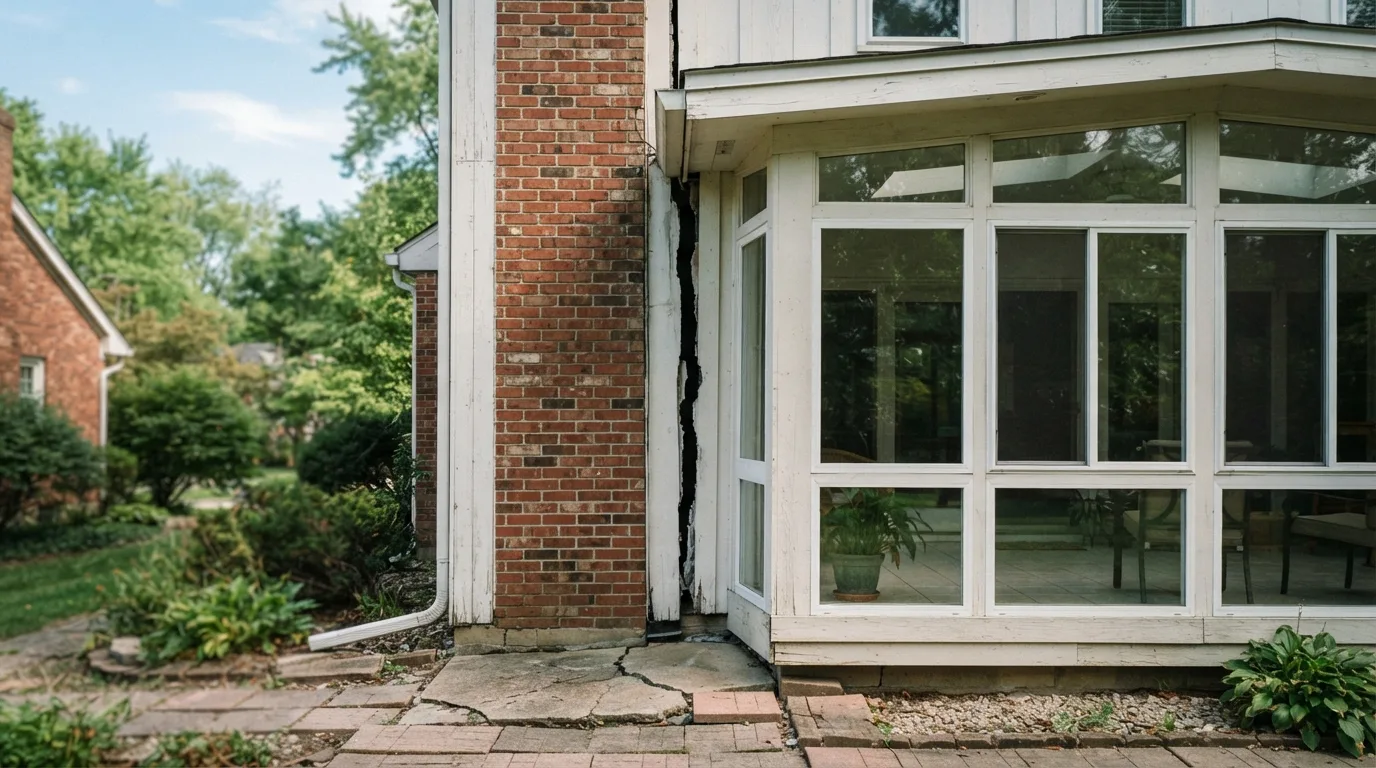
- Diagonal cracks in brick or drywall at the attachment point. Check the exterior brick and the interior drywall next to the sunroom.
- A visible gap or step between slabs. Look at the threshold between the house and sunroom and along the outside slab edge.
Urgent signs (call now):
- A sagging roof line or roof panels pulling off the wall. Look at the roof edge where it meets the house.
- Cracked glass with no impact. Check the corners of large panes. This means the frame is racking.
The updated Word fil
A simple way to track it: make a small pencil mark at each end of a crack, measure any gap with a tape measure, and write the date next to it. Take a photo. Check again in two to four weeks. If the crack has grown past your marks or the gap is wider, the joint is still moving.
Sunroom Problem or Foundation Problem? Who to Call First
This is the question most homeowners get stuck on, so here’s a plain answer.
Call a sunroom repair specialist first if:
- The problems are limited to the sunroom: drafts, torn sealant, sticking sunroom doors, leaks at the roof-to-wall joint.
- The house itself shows no new cracks, sticking interior doors, or sloping floors.
- Your tracking marks show the gap has stopped growing.
In these cases, the slab may have moved and then settled. The sunroom just needs to be adjusted, resealed, and reflashed to its new position.
Call a foundation specialist first if:
- You see cracks or sticking doors inside the main house, not just the sunroom.
- The step between the house and the sunroom slab is getting bigger.
- Your marks show the joint is still moving month to month.
Sealing a joint that’s still actively moving is a short-term fix. The new seal will tear again. If we see signs of ongoing foundation movement during our visit, we’ll tell you so, and we’ll recommend you have the slab evaluated before we make permanent sunroom repairs. Once the foundation is stable, we bring the sunroom back into line.
Not sure which applies? Start with the sunroom inspection. It’s free, and it will help you know whether a foundation company needs to be part of the picture.
How Sunroom Separation Is Usually Repaired
Most separation problems don’t mean tearing the sunroom down. The repair depends on how far things have shifted and whether the movement has stopped. Common fixes include:
- Resealing and reflashing the roof-to-house joint. Old sealant and flashing are removed and replaced with materials made to flex with seasonal movement, so the joint stays watertight.
- Re-securing the wall connection. Loose or pulled fasteners at the wall channel are reset so the sunroom is tied back to the house properly.
- Adjusting and realigning doors and windows. Rollers, tracks, hinges, and strike plates are adjusted so doors close and lock and windows seal again.
- Repairing or replacing damaged components. Bent frame members, cracked glass, or roof panels that were stressed by the shift are replaced.
- Fixing the water that started it. Redirecting gutters and downspouts away from the sunroom slab is often part of the long-term fix.
What not to do
It’s tempting to grab a tube of caulk and fill the gap. Please don’t, at least not as your only fix.
- Caulk over a moving joint will tear again, often within a season.
- Thick beads of caulk can trap water behind them and hide damage that keeps spreading.
- Most caulks don’t bond or cure well in cold weather, so a winter DIY job may fail fast.
- Smearing sealant over an existing flashing detail can make a proper repair harder and more expensive later.
If water is actively coming in, a temporary cover or tape over the gap is fine to hold you over. Then get the joint looked at.
Why Fix It This Winter, Not Next Summer
A separating joint is an open door for water. In North Texas, spring brings heavy rain and hail, and that water will find any gap at the roof-to-house line. Once it gets into the wall, you’re dealing with rotted framing, damaged drywall, and possible mold on the house side, not just the sunroom.
Winter is also when the gap is easiest to diagnose. The soil has rehydrated, the frame is contracted, and drafts make the problem obvious. Getting it inspected now lets you plan the repair before storm season instead of reacting to a leak in April.
Get Your Sunroom Checked by Sunshine Sunrooms
Sunshine Sunrooms has been repairing and building sunrooms across Dallas-Fort Worth since 1993, with about 10,000 installations and repairs. We know how North Texas soil treats sunrooms, and structure separation and cracks are both core sunroom repair services for us.
It doesn’t matter who built your sunroom or when. If your original installer won’t help, we will. Your free in-home consultation covers the inspection, a straight answer on what’s causing the problem, and pricing for the repair. Financing is available.
We serve Dallas, Fort Worth, Plano, Richardson, Lewisville, Grapevine, Euless, Coppell, Farmers Branch, The Colony, and surrounding North Texas communities. Home Repair License #24277. BBB Accredited, A+ rating.
Seeing gaps, cracks, or sticking doors? Call (972) 243-5390 or request a free estimate. Learn more about our sunroom repair services.
Frequently Asked Questions
Why is my sunroom pulling away from my house?
In North Texas, the most common cause is expansive clay soil moving the sunroom slab differently than the house foundation. Poor drainage at the slab edge, from gutters, downspouts, or sprinklers, often makes it worse.
Is a gap between my sunroom and house dangerous?
A small gap with torn caulk is mainly a leak and draft risk. A growing gap, a sagging roof line, or cracked glass with no impact means the structure is under stress and should be inspected right away.
Can a separated sunroom be reattached?
Often, yes. If the movement has stopped, the wall connection can usually be re-secured, resealed, and reflashed, and the doors and windows realigned. If the slab is still moving, the foundation issue should be addressed first.
Why did my sunroom door start sticking in winter?
Seasonal soil movement can shift the sunroom frame slightly out of square. Cold weather also contracts aluminum frames. If the door also has new gaps at the top or bottom, the frame has likely moved.
Do you fix foundations?
No. Sunshine Sunrooms repairs the sunroom itself. If we see signs of ongoing foundation movement, we’ll tell you and recommend you have it evaluated first, then we’ll restore the sunroom once the slab is stable.


